🍇
Fresh fruits delivered daily across Mumbai, Navi Mumbai & Thane
🌿
100% Chemical-free & naturally ripened daily produce
🚚
Next-day delivery slots available. WhatsApp us to confirm

Types of Mangoes in India

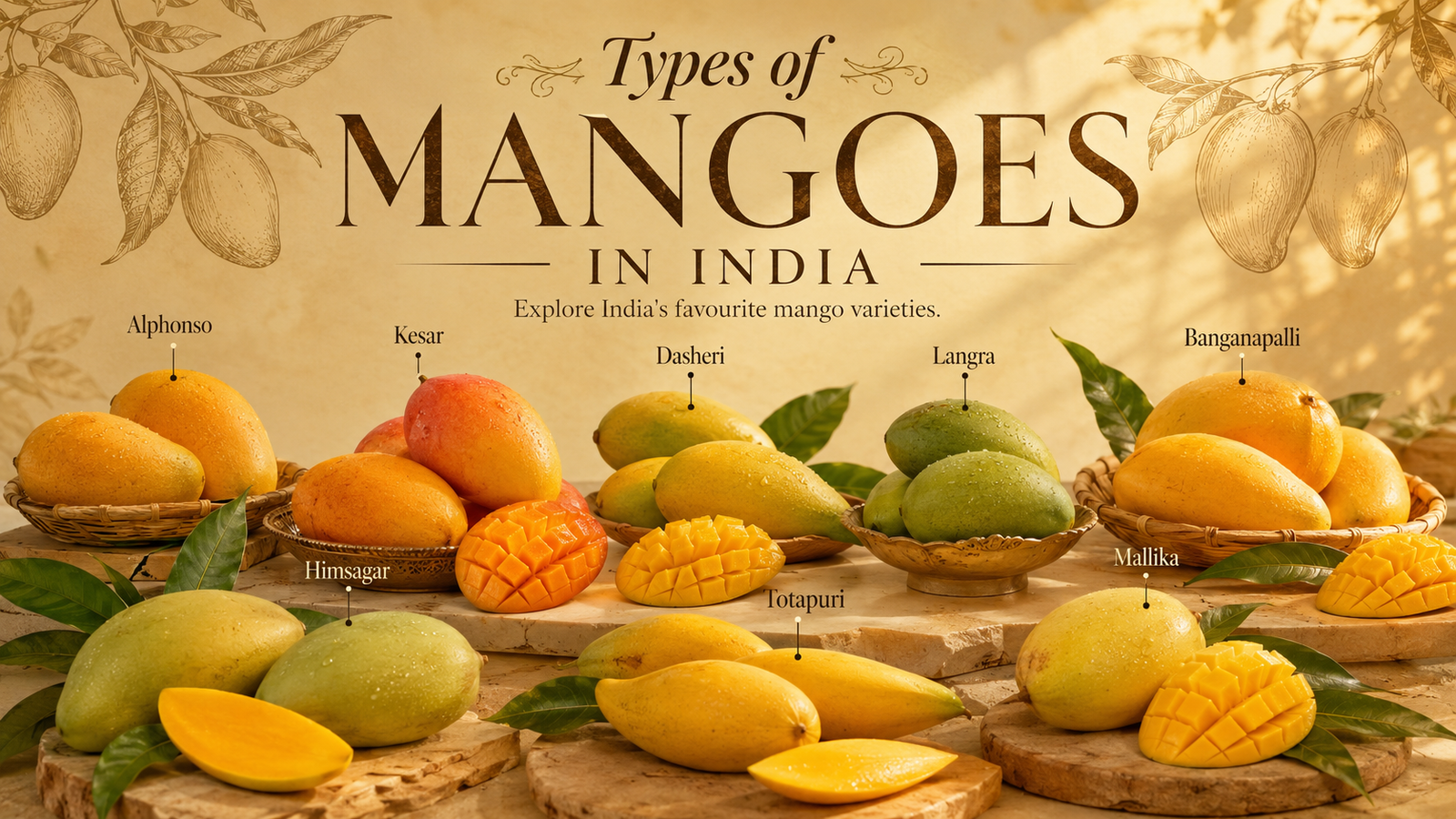
A detailed tour of India’s finest mango varieties — where each grows, how it tastes, and what it’s best for.
India grows more mangoes than any other country on earth, and with well over a thousand varieties cultivated across its regions, the mango is rightly cherished as the national fruit. Each part of the country has its own champion — a variety shaped by local soil, climate and generations of careful growing. Some are creamy and rich, others sweet and tangy; some are best eaten fresh out of hand, others shine in aamras, pickles or desserts. This guide is a tour of the varieties you’re most likely to meet through the season, with a sense of where each comes from and what makes it special, so you can taste your way knowledgeably through India’s greatest fruit.
The Great Indian Mango Varieties
Alphonso (Hapus) — Maharashtra
The celebrated king of mangoes, grown chiefly in Ratnagiri and Devgad. Alphonso is prized for its creamy, completely fibreless pulp, deep saffron colour and intense, heady aroma. It has a short season and a premium price, and it’s the classic choice for eating fresh and for gifting. For many, the Alphonso defines what a mango should be.
Kesar — Gujarat
Gujarat’s saffron-coloured pride, from the Gir and Junagadh regions. Kesar is sweet with a gentle, refreshing tang and a smooth, golden pulp. Slightly firmer than Alphonso, it’s the mango of choice for aamras, shakes and desserts, and offers excellent value for a premium variety.
Dasheri — Uttar Pradesh
A beloved north Indian classic, most famously from Malihabad near Lucknow. Dasheri is elongated in shape, very sweet and juicy, with a soft, fibreless pulp and a lovely fragrance. It’s a fresh-eating favourite across the north and a cornerstone of the region’s mango culture.
Langra — Uttar Pradesh
Originating around Varanasi, Langra is unusual in that its skin stays greenish even when the fruit is fully ripe. Don’t let that fool you — inside it’s rich, aromatic and pleasantly tangy-sweet, with a distinctive flavour that has a devoted following.
Chaunsa — North India
A late-season star, golden-yellow and exceptionally sweet, with a soft, almost melting pulp and a strong, fragrant aroma. Chaunsa arrives later in the summer and is loved for its intense sweetness — one of the finest mangoes to eat simply on its own.
Badami — Karnataka
Often called the Alphonso of Karnataka, Badami is smooth, rich and sweet, with a fibreless texture that closely resembles its Maharashtrian cousin. It offers much of the Alphonso’s luxurious character at a friendlier price, making it a favourite among value-conscious mango lovers.
Totapuri — South India
Instantly recognisable by its distinctive parrot-beak shape (tota means parrot), Totapuri is less sweet and noticeably tangy, with firm flesh. This makes it less suited to eating plain and ideal instead for salads, pickles, chutneys and juices, where its tartness and firmness are real assets.
Banganapalli — Andhra Pradesh
A large, handsome, golden mango from Andhra Pradesh, also known as Benishan. Its flesh is firm, fibreless and mildly sweet, and it keeps well, which makes it excellent for slicing and for those who prefer a gentler, less intense sweetness.
Other Notable Varieties
Beyond the headline names, India’s mango map runs deep. Himsagar and Mallika are prized in the east; Pairi is an early-season favourite in the west, often used for aamras; Neelam arrives late and is small, sweet and fragrant; Raspuri from Karnataka is juicy and soft; and Imam Pasand is a rare, aromatic connoisseur’s mango from the south. Part of the joy of mango season is discovering these lesser-known gems.
Quick Variety Reference
| Variety | Main Region | Flavour | Best For |
| Alphonso | Maharashtra | Rich, creamy | Eating fresh, gifting |
| Kesar | Gujarat | Sweet-tangy | Aamras, desserts |
| Dasheri | Uttar Pradesh | Very sweet, juicy | Eating fresh |
| Langra | Uttar Pradesh | Tangy-sweet | Fresh & pulp |
| Chaunsa | North India | Very sweet, melting | Eating fresh |
| Badami | Karnataka | Smooth, rich | Fresh & shakes |
| Totapuri | South India | Tangy, firm | Salads, pickles, juice |
| Banganapalli | Andhra Pradesh | Mild, firm | Slicing, eating fresh |
How to Enjoy Mangoes at Their Best
- Buy mangoes slightly firm and let them ripen at room temperature until they smell sweet at the stem end and give gently to a soft press.
- Once ripe, refrigerate to hold them for a few extra days, but return them to room temperature before eating for the fullest flavour.
- For aamras, shakes and kulfi, reach for sweeter, softer varieties like Kesar, Chaunsa or Dasheri.
- For salads, pickles and dishes where you want the fruit to hold its shape, choose firmer, tangier types like Banganapalli or Totapuri.
- Chill mangoes briefly before serving on a hot day — a cold Alphonso is one of summer’s great simple pleasures.
| Taste Your Way Through the Season Because different varieties peak at different times — Alphonso and Kesar early, Chaunsa and Langra later — trying a new type each week is the most delicious way to experience the full sweep of the Indian mango season. |