🍇
Fresh fruits delivered daily across Mumbai, Navi Mumbai & Thane
🌿
100% Chemical-free & naturally ripened daily produce
🚚
Next-day delivery slots available. WhatsApp us to confirm

How to Store Fruits Properly

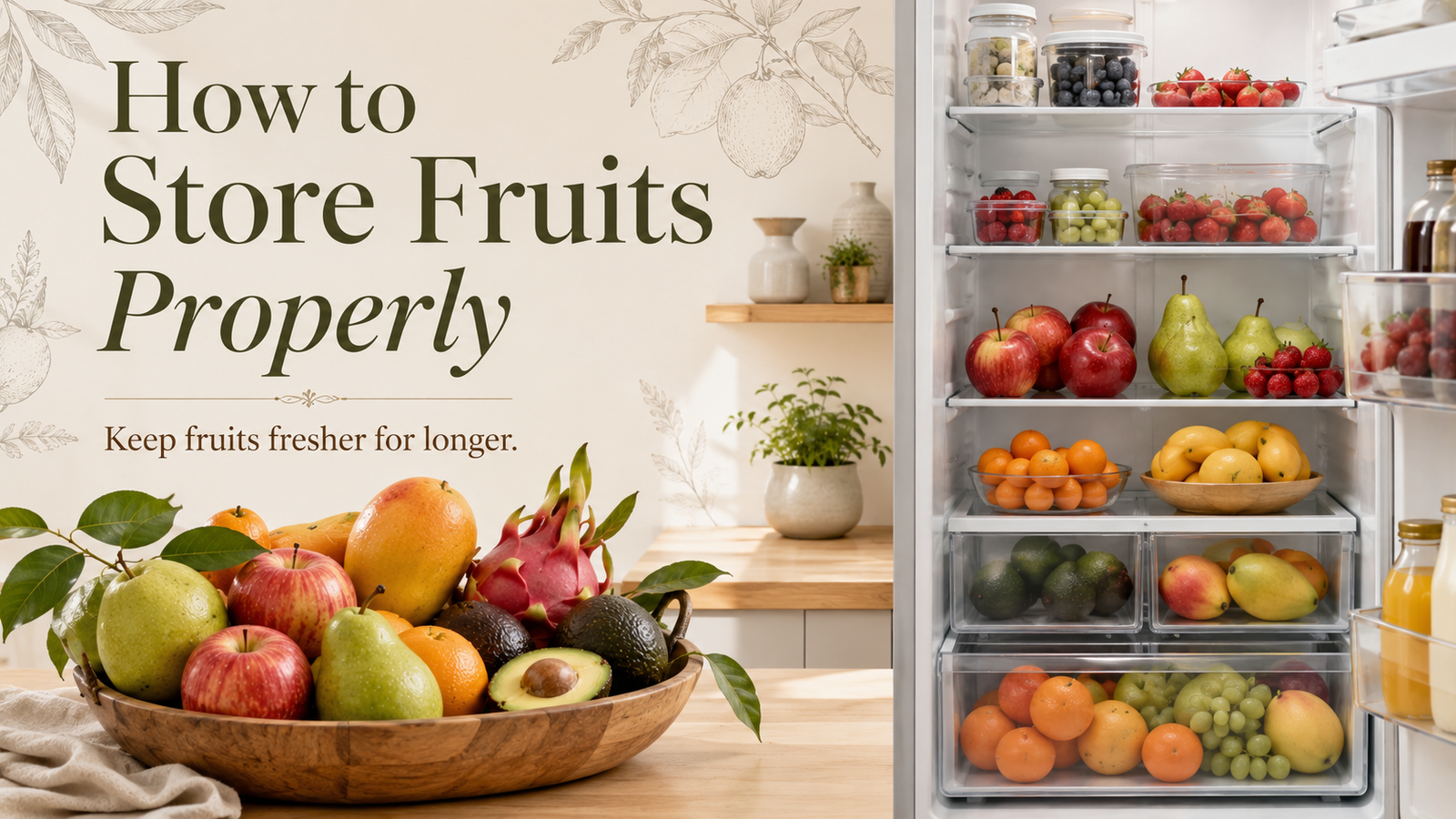
The complete guide to keeping every fruit fresher for longer — and wasting far less of what you buy.
Buying beautiful, fresh fruit is only half the job. Storing it well is what keeps it delicious right down to the last piece, and it can be the difference between fruit that lasts a fortnight and fruit that spoils in days. The secret most people never learn is that different fruits have genuinely different needs. Some keep ripening after they’re picked and should sit on your counter; others are as ripe as they’ll ever be and belong in the fridge from the start. Some give off gases that quietly ripen everything around them. Once you understand these rules, you’ll waste less, spend less and always have fruit at its best.
The Most Important Idea: Two Kinds of Fruit
Almost every storage decision comes down to a single distinction, and it’s the most useful thing to learn about fruit. Fruits fall into two groups depending on whether they continue to ripen after being harvested.
- Climacteric fruits keep ripening after picking. These include mango, banana, papaya, custard apple, pear, peach, plum, apricot, fig and kiwi. They’re often sold firm and under-ripe on purpose, and they’ll soften and sweeten on your counter. Ripen them at room temperature, then move them to the fridge once they’re ready to slow things down.
- Non-climacteric fruits do not ripen further after picking. These include grapes, all citrus (orange, sweet lime, lemon), watermelon, pomegranate, pineapple and most berries. What you buy is what you get, so choose ripe fruit and store it cool to preserve it. It won’t improve at home, but good storage keeps it at its peak for longer.
The Ethylene Effect
Here’s a piece of fruit science that quietly ruins many a fruit bowl. Certain fruits — bananas, apples, mangoes, pears and avocados among them — release ethylene, a natural ripening gas. Ethylene speeds up ripening in nearby fruit, which can be useful or harmful depending on what you want. Keep a banana next to a firm mango and you’ll ripen the mango faster. But leave apples next to your berries and you’ll find the berries spoiling far sooner than they should. The practical rule: store big ethylene producers separately from delicate fruits, unless you’re deliberately trying to speed up ripening.
Counter or Fridge? A Fruit-by-Fruit Guide
| Fruit | Where to Store | Notes |
| Banana | Counter | Never fridge when unripe — cold blackens the skin |
| Mango | Counter, then fridge | Ripen at room temp; chill once soft and fragrant |
| Papaya | Counter, then fridge | Ripen at room temp, then refrigerate to hold |
| Custard apple | Counter, then fridge | Ripens quickly; eat soon after it softens |
| Apple | Fridge | Stores best cold; keeps for several weeks |
| Grapes | Fridge | Store unwashed in a breathable bag; rinse before eating |
| Berries | Fridge | Keep dry; wash only just before eating |
| Watermelon | Counter whole, fridge cut | Chill after cutting; use within 3–4 days |
| Orange & citrus | Counter or fridge | Fridge extends life to 2–3 weeks |
| Pomegranate | Counter or fridge | Whole fruit keeps for weeks |
| Pear & peach | Counter, then fridge | Ripen at room temp, then chill |
The Golden Rules of Fruit Storage
- Separate the ethylene producers. Keep bananas, apples and mangoes away from delicate fruits and vegetables unless you want to ripen those faster. A little distance goes a long way.
- Don’t wash until you’re ready to eat. Washing berries, grapes and cherries before storing adds surface moisture that invites mould. Rinse them only just before serving.
- Let fruit breathe. Store fruit in perforated bags, loosely covered containers or open bowls so air can circulate. Sealing fruit in airtight plastic traps moisture and speeds up decay.
- Remove spoiled pieces immediately. One rotting fruit releases ethylene and mould spores that hasten decay across the whole bowl. Pull out any soft, bruised or mouldy pieces the moment you spot them.
- Use your crisper drawer wisely. The higher humidity of the crisper drawer is ideal for berries, grapes, cut fruit and leafy produce, helping them stay crisp and fresh.
- Keep fruit out of direct sunlight. On the counter, choose a cool, shaded spot. Direct sun overheats fruit and makes it spoil unevenly and quickly.
Reducing Waste: Making Fruit Last
If you often find yourself throwing away fruit, a few habits will change that. Buy delicate fruits like berries, litchi and custard apple in smaller quantities and more often, since they don’t keep. Keep an eye on ripening fruit and eat the ripest first. And when fruit is on the very edge of being too ripe to enjoy fresh, don’t bin it — over-ripe bananas make wonderful smoothies and cakes, soft mangoes turn into aamras or milkshakes, and slightly tired berries are perfect blended or cooked down.
| The Speed-Ripening Trick Need to ripen a firm mango, papaya or pear in a hurry? Place it in a paper bag with a ripe banana or apple and fold the top over. The trapped ethylene concentrates around the fruit and can cut ripening time dramatically — often overnight. |