🍇
Fresh fruits delivered daily across Mumbai, Navi Mumbai & Thane
🌿
100% Chemical-free & naturally ripened daily produce
🚚
Next-day delivery slots available. WhatsApp us to confirm

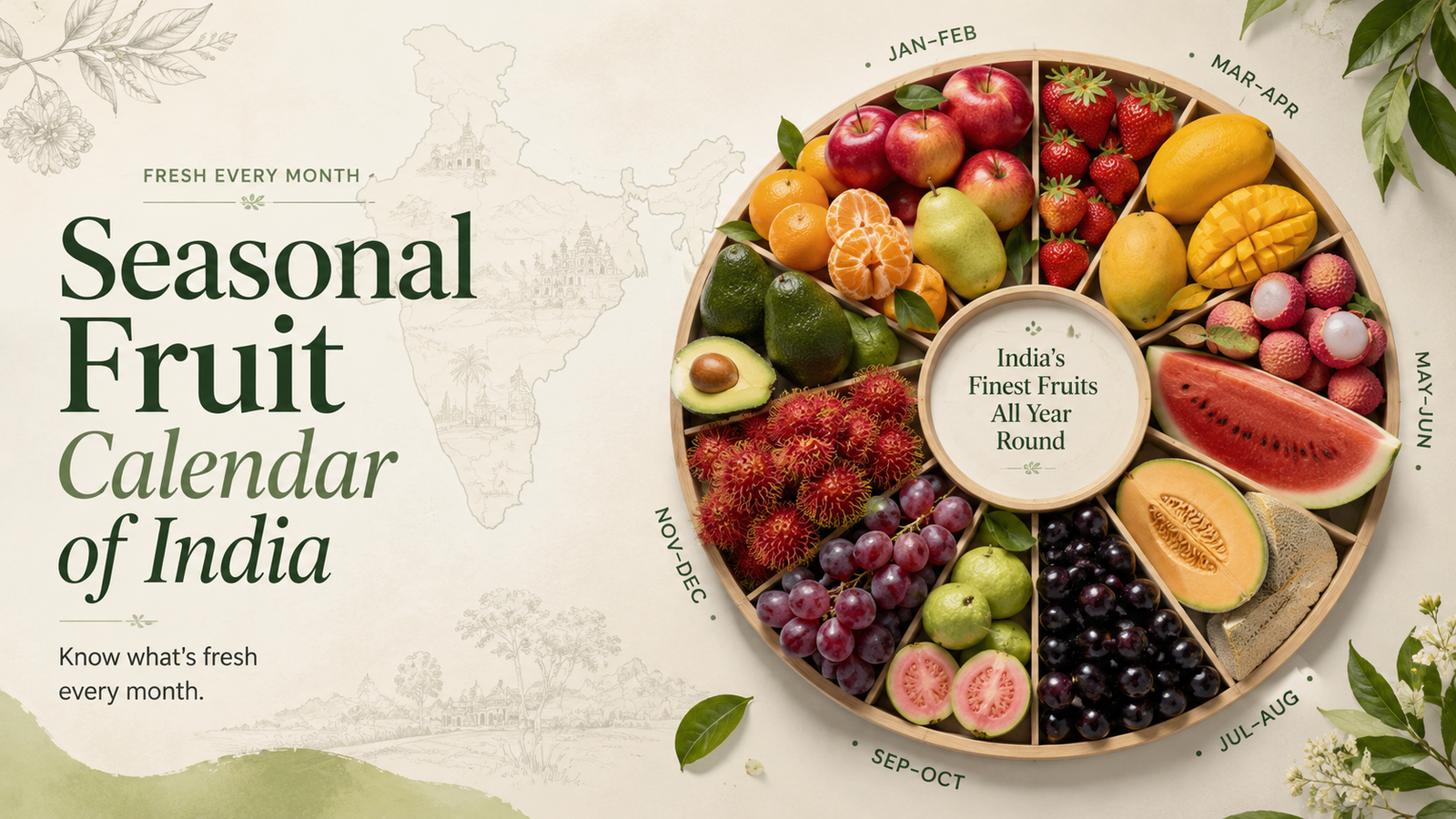
Seasonal Fruit Calendar of India

APMC Vashi Market Guide • India
Indian Seasonal Fruit Calendar
Discover peak harvest timelines for 20+ Indian & premium imported fruit varieties — sourced fresh daily from APMC Vashi & delivered across Mumbai, Navi Mumbai & Thane.
📅 This Month
All Fruits (20)
☀️ Summer (Mar – May)
🌧️ Monsoon (Jun – Aug)
🍁 Autumn (Sep – Nov)
❄️ Winter (Dec – Feb)
✨ Year-Round Staples
🥭
Alphonso Mango (Hapus)
📍 Ratnagiri & Devgad, MH
Saffron skin, rich aromatic pulp, and GI-tagged authentic sweetness. Naturally ripened in hay.
JanFeb
MarApr
MayJun
JulAug
SepOct
NovDec
🥭
Kesar & Dasheri Mango
📍 Gujarat & Uttar Pradesh
Intense aroma, sweet golden fiberless pulp. Perfect for fresh Aamras and summer juices.
JanFeb
MarApr
MayJun
JulAug
SepOct
NovDec
🍓
Mahabaleshwar Strawberries
📍 Mahabaleshwar, MH
Bright red, tangy-sweet, and handpicked daily from Panchgani & Mahabaleshwar hill slopes.
JanFeb
MarApr
MayJun
JulAug
SepOct
NovDec
🫐
Blueberries & Raspberries
📍 Mahabaleshwar & Air-Flown
Plump, antioxidant-rich berries. Sealed hygienic punnets delivered fresh daily.
JanFeb
MarApr
MayJun
JulAug
SepOct
NovDec
🥑
Imported Hass Avocados
📍 Peru, NZ & Ooty
Creamy, rich texture perfect for salads and healthy breakfasts. Temperature controlled.
JanFeb
MarApr
MayJun
JulAug
SepOct
NovDec
🍇
Nashik Grapes (Green & Black)
📍 Nashik, MH (Grape Capital)
Crisp, sweet, seedless Sonaka & Crimson varieties harvested in Nashik vineyards.
JanFeb
MarApr
MayJun
JulAug
SepOct
NovDec
🍊
Nagpur Oranges (Santra)
📍 Nagpur, MH
Juicy, sweet-tangy citrus packed with natural Vitamin C. Hand-picked at APMC market.
JanFeb
MarApr
MayJun
JulAug
SepOct
NovDec
🍎
Kashmiri & Shimla Apples
📍 Kashmir & Himachal Pradesh
Crisp Royal Delicious apples directly from mountain orchards. Naturally sweet & crunchy.
JanFeb
MarApr
MayJun
JulAug
SepOct
NovDec
🍒
Kashmiri Red Cherries
📍 Srinagar, Jammu & Kashmir
Short-season delicacy! Juicy red cherries air-shipped fresh from Kashmir valleys.
JanFeb
MarApr
MayJun
JulAug
SepOct
NovDec
🍒
Chilean Dark Cherries
📍 Air-Flown from Chile
Extra large, deep purple-red cherries. Crunchy, sweet, and luxury seasonal treat.
JanFeb
MarApr
MayJun
JulAug
SepOct
NovDec
🍈
Fresh Sitaphal (Custard Apple)
📍 Purandar & Beed, MH
Rich, creamy, pulpy custard apples harvested from Purandar farms. Super sweet.
JanFeb
MarApr
MayJun
JulAug
SepOct
NovDec
🍉
Red Watermelon (Tarbooz)
📍 Maharashtra & Karnataka
Deep red, hydrating, naturally sweet watermelons selected for high sugar Brix levels.
JanFeb
MarApr
MayJun
JulAug
SepOct
NovDec
🍑
Shahi Lychee (Litchi)
📍 Muzaffarpur, Bihar
Famous Muzaffarpur Shahi Litchi — ultra juicy, translucent sweet pulp available for a few weeks.
JanFeb
MarApr
MayJun
JulAug
SepOct
NovDec
🍎
Bhagwa Pomegranate (Anar)
📍 Solapur, MH (GI Tag)
Deep red ruby pearls, soft seeds, rich in iron and antioxidants. Premium export quality.
JanFeb
MarApr
MayJun
JulAug
SepOct
NovDec
🫐
Fresh Jamun (Black Plum)
📍 Maharashtra & MP
Tangy-sweet, purple fruit famed for diabetes management & digestion benefits.
JanFeb
MarApr
MayJun
JulAug
SepOct
NovDec
🐉
Red & White Dragon Fruit
📍 Gujarat & Karnataka
Vibrant magenta skin, sweet crunchy pulp loaded with prebiotic fiber and vitamin C.
JanFeb
MarApr
MayJun
JulAug
SepOct
NovDec
🥝
Zespri Green & Gold Kiwi
📍 Arunachal & New Zealand
Immunity-boosting kiwi packed with Vitamin C and digestive enzymes.
JanFeb
MarApr
MayJun
JulAug
SepOct
NovDec
🍈
Pink & White Guava (Amrood)
📍 Allahabad & MP
Crisp Taiwan Pink & Allahabad Safeda guavas. Rich in dietary fiber and Vitamin C.
JanFeb
MarApr
MayJun
JulAug
SepOct
NovDec
🍈
Sweet Muskmelon (Kharbuja)
📍 Andhra & MP
Aromatic orange & green pulped melon. Refreshing summer cooler.
JanFeb
MarApr
MayJun
JulAug
SepOct
NovDec
🌴
Jumbo Medjool Dates (Khajoor)
📍 Kutch, GJ & Saudi Import
Soft, caramel-like natural sweetness. Premium energy booster for daily wellness.
JanFeb
MarApr
MayJun
JulAug
SepOct
NovDec
12-Month Indian Fruit Availability Matrix
Real-time harvesting calendar across India’s top fruit orchards & APMC Vashi market arrivals.
| Fruit Variety | Jan | Feb | Mar | Apr | May | Jun | Jul | Aug | Sep | Oct | Nov | Dec |
|---|---|---|---|---|---|---|---|---|---|---|---|---|
| 🥭 Alphonso Mango | ||||||||||||
| 🍓 Mahabaleshwar Strawberry | ||||||||||||
| 🫐 Exotic Berries | ||||||||||||
| 🥑 Hass Avocados | ||||||||||||
| 🍇 Nashik Grapes | ||||||||||||
| 🍊 Nagpur Oranges | ||||||||||||
| 🍎 Kashmiri Apples | ||||||||||||
| 🍒 Kashmiri Cherries | ||||||||||||
| 🍒 Chilean Cherries | ||||||||||||
| 🍈 Sitaphal (Custard Apple) | ||||||||||||
| 🍉 Tarbooz (Watermelon) | ||||||||||||
| 🍑 Shahi Lychee | ||||||||||||
| 🐉 Dragon Fruit |
🔥 Peak Harvest
🟢 Available Fresh
⚪ Off Season
A complete month-by-month guide to eating fruit at its freshest, tastiest and best value.
India has one of the most abundant and varied fruit baskets on earth. Its geography stretches from the snow-fed valleys of the Himalayas to the tropical coasts of the south, and that range of climates means that in any given month, somewhere in the country, a fruit is coming into its prime. Learning the rhythm of the fruit year is one of the most useful things a home cook or fruit lover can do. It helps you shop smarter, eat better and appreciate the natural cycle that gives each fruit its short, glorious moment.
This guide walks through the entire Indian fruit calendar — season by season and month by month — so that whatever time of year it is, you know exactly what to look for.
Why Eating Seasonally Matters
Before the calendar itself, it’s worth understanding why seasonal fruit is genuinely better, and not just a nice idea. When fruit is grown and harvested in its natural season, several things line up in your favour at once.
- Peak flavour. Fruit that ripens in its proper season, in its ideal climate, develops more natural sugars and aromatic compounds. A mango in May simply tastes more like a mango than one forced out of season.
- Higher nutrition. Vitamins such as vitamin C degrade over time. Fruit that reaches you soon after harvest — as seasonal, local produce usually does — holds on to more of its nutritional value than fruit stored for weeks or shipped across long distances.
- Better prices. Basic economics applies to fruit. When a variety is at the peak of its harvest, supply is high and prices fall. Buying watermelon in April or oranges in December costs a fraction of what the same fruit costs out of season.
- Natural variety in your diet. Eating with the seasons naturally rotates the fruits — and therefore the nutrients — in your diet across the year, instead of eating the same few fruits every week.
- A lighter footprint. Seasonal, locally grown fruit needs less refrigeration, less long-distance transport and less artificial ripening than out-of-season imports.
The Three Broad Seasons
India’s fruit year loosely follows three great arcs. Summer is the season of mangoes and melons — the headline months for most fruit lovers. The monsoon brings its own quieter treasures, from deep-purple jamun to creamy custard apple. And winter belongs to citrus, apples, guava and pomegranate, filling fruit bowls with colour through the cooler months. Within these arcs, individual fruits peak in tighter windows, which the table below sets out.
| Season | Months | Fruits at Their Peak |
| Spring | Feb – Mar | Strawberry, papaya, banana, sweet lime (mosambi), early mango |
| Summer | Apr – Jun | Mango, watermelon, muskmelon, litchi, jackfruit, black grapes |
| Monsoon | Jul – Sep | Jamun, custard apple (sitaphal), pear, peach, plum, fig, dragon fruit |
| Autumn | Oct – Nov | Pomegranate, guava, apple, banana, chikoo (sapota), sweet lime |
| Winter | Dec – Jan | Orange (Nagpur), guava, apple, grapes, custard apple, amla, kiwi |
A Closer Look, Month by Month
February & March — The First Stirrings of Spring
As winter loosens its grip, strawberries reach their peak, especially from the hills around Mahabaleshwar. Papaya and banana are steady and reliable, sweet limes are juicy, and the very first early mango varieties begin to trickle into markets, teasing the season to come. It’s a gentle, transitional time in the fruit year — the calm before the mango storm.
April to June — The Height of Summer
This is the crown of the Indian fruit calendar. Mango season arrives in full force, and it’s worth savouring every week of it, because different varieties peak at different times. Alphonso and Kesar lead the early part of the season, followed by Badami, Dasheri, Langra and the wonderfully sweet, late-arriving Chaunsa. Alongside the mangoes, watermelon and muskmelon become daily staples, offering cool relief from the heat. Litchi appears for a short, precious window in May and June — buy it fresh and eat it quickly, because it doesn’t keep. Jackfruit, too, is at its best now for those who love its distinctive, honeyed flesh.
July to September — The Monsoon’s Quiet Gifts
When the rains arrive, the fruit landscape shifts to a different palette. Jamun — the deep-purple Indian blackberry — stains fingers and tongues across the country and is prized for its unique tart-sweet flavour. Custard apple, or sitaphal, comes into its creamy prime, its soft segments almost dessert-like on their own. Stone fruits like peach, plum and apricot, along with pears, arrive from the northern hills. These monsoon fruits tend to be delicate and perishable, so they reward buying little and often.
October & November — The Colours of Autumn
As the monsoon retreats, pomegranates ripen to jewel-red, guavas turn crunchy and fragrant, and the first apples and fresh grapes reach the plains. Chikoo (sapota) offers its soft, malty sweetness, and sweet limes remain a dependable everyday fruit. Autumn is a bridge between the wet richness of monsoon and the crisp abundance of winter.
December & January — The Peak of Winter
Winter is citrus season above all. Nagpur oranges are juicy, abundant and cheap, and few things say Indian winter quite like peeling one in the afternoon sun. Guavas are at their crunchy best, pomegranates are deep and sweet, and apples and grapes fill the fruit bowl. Amla (Indian gooseberry) comes into season too, packed with vitamin C — a traditional winter tonic. It’s a colourful, generous time of year for anyone who loves fruit.
| A Simple Rule for Any Month Across almost every fruit and every season, two signs of ripeness rarely fail: the fruit should feel heavy for its size, and it should smell sweet and fragrant at the stem end. When in doubt, trust your nose and the weight in your hand. |
Frequently Asked Questions
Is imported fruit ever a good idea?
Absolutely — imported fruits like avocados, kiwis and certain berries fill gaps in the local calendar and add welcome variety. The key is simply to know what’s local and seasonal versus what’s travelled, and to buy each at its best.
How can I tell if fruit has been artificially ripened?
Artificially ripened fruit often has a uniform colour but stays hard inside, lacks a natural aroma, and can taste flat. Naturally ripened fruit ripens unevenly, smells fragrant and yields gently to a soft press. Buying in season reduces the chances of getting force-ripened fruit.
Which fruits are available all year round?
Banana, papaya and sweet lime are the most reliably year-round fruits in India, along with apples (thanks to cold storage) and, increasingly, imported produce. Everything else has a clear peak that this calendar maps out.