🍇
Fresh fruits delivered daily across Mumbai, Navi Mumbai & Thane
🌿
100% Chemical-free & naturally ripened daily produce
🚚
Next-day delivery slots available. WhatsApp us to confirm

Complete Apple Buying Guide

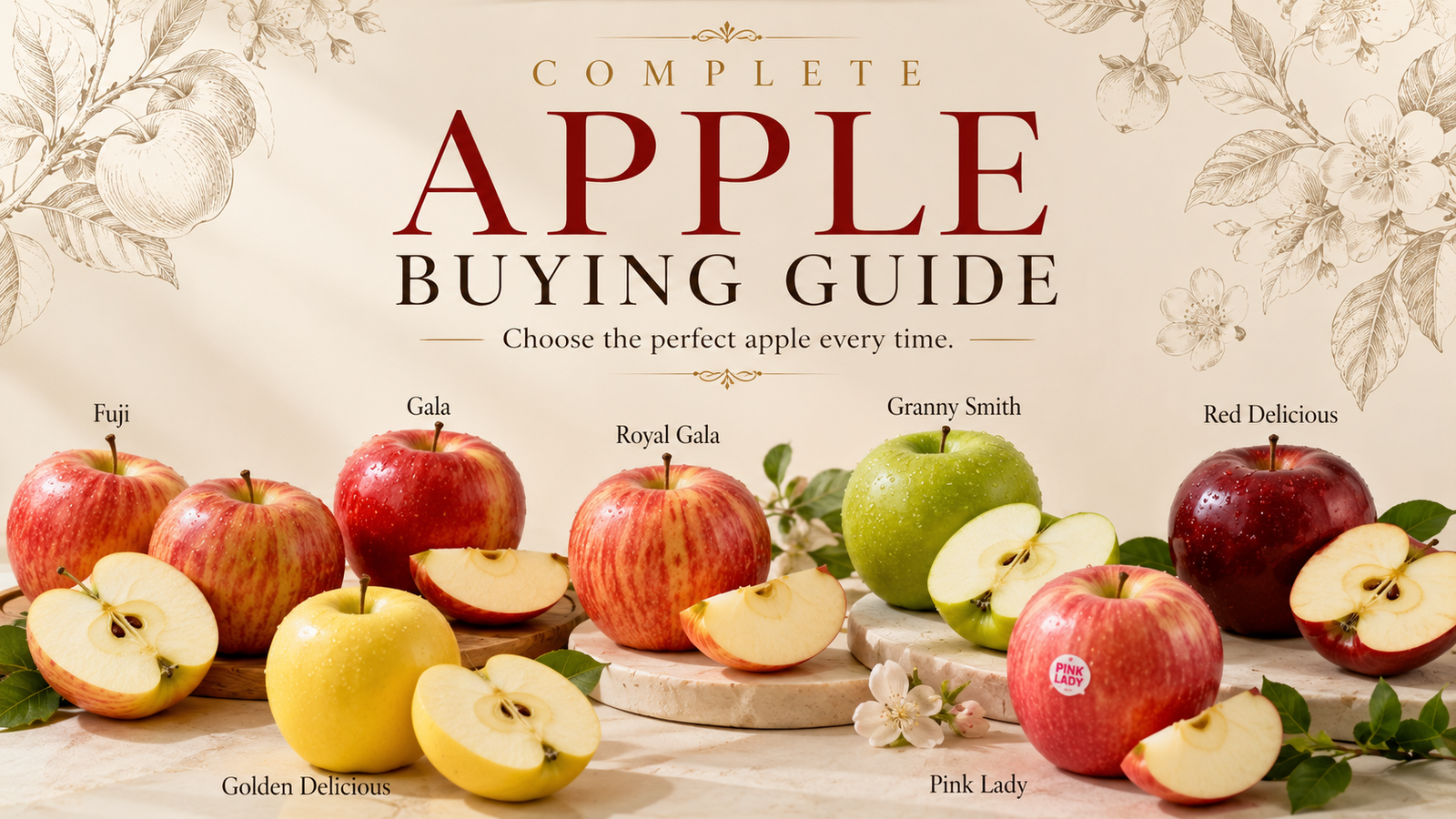
Everything you need to choose, store and enjoy apples — from matching variety to purpose to spotting true freshness.
Apples are among the most versatile fruits in any kitchen — crisp for snacking, sweet for salads, tart for baking, and a dependable everyday source of fibre and vitamins. Yet not all apples are alike, and the gap between a great apple and a disappointing, mealy one comes down almost entirely to choosing well and storing right. This guide covers how to spot a genuinely fresh apple, which variety suits which purpose, how to keep them at their best, and a little about why they’re so good for you.
How to Spot a Fresh, Good Apple
A fresh apple announces itself in several ways at once. Run through these checks and you’ll rarely be caught out by a soft or mealy one.
- Feel for firmness. A good apple is firm and hard when you hold it. Press gently with your thumb — if it gives, dents or feels soft anywhere, it’s past its best and likely to be mealy inside. Firmness is the single clearest sign of a fresh apple.
- Inspect the skin. Look for taut, smooth, unblemished skin. Wrinkling is a tell-tale sign of moisture loss and age — a wrinkled apple has been off the tree too long. Avoid soft brown spots and bruises, which spread and turn the flesh beneath mushy.
- Weigh it in your hand. A fresh apple feels heavy and dense for its size, a sign it’s still full of juice. A light apple for its size has begun to dry out inside.
- Give it a sniff. Ripe, fresh apples give off a light, sweet, clean fragrance. A musty, fermented or winey smell means the apple is overripe and starting to break down.
- Consider the colour — but don’t rely on it alone. Deep, rich colour typical of the variety usually signals good ripeness. But colour can be misleading on its own, so always pair it with the firmness test, which is far more reliable.
Choosing the Right Apple for the Job
Different apple varieties are prized for different strengths, and matching the apple to how you’ll use it makes a real difference to the result. A tart, firm apple that’s perfect for baking may be less appealing for straight snacking, and vice versa. Here’s a guide to the varieties you’re most likely to find.
| Variety | Taste & Texture | Best For |
| Red Delicious | Mildly sweet, softer flesh | Snacking, fruit bowls, lunchboxes |
| Royal Gala | Sweet, crisp, juicy | Snacking, salads, everyday eating |
| Fuji | Very sweet, firm, crunchy | Snacking, juicing, salads |
| Granny Smith | Tart, firm, very crisp | Baking, salads, cooking |
| Golden Delicious | Sweet, mellow, tender | Salads, sauces, baking |
| Himachali / Kashmiri | Balanced sweet-tart, crisp | All-round eating, snacking |
| Washington (imported) | Sweet, firm, juicy | Snacking, gifting |
Storing Apples the Right Way
Apples are among the longest-keeping fruits when stored properly, and a few simple habits will keep them crisp for weeks rather than days.
- Refrigerate them. Apples last far longer in the cool of the crisper drawer — often several weeks — than they do at room temperature, where they can go soft within days. Cold is an apple’s friend.
- Keep them apart from other fruit. Apples give off plenty of ethylene gas, which ripens nearby produce faster. Store them separately if you want your other fruits and vegetables to last.
- Don’t wash until you eat. Washing before storing adds moisture that encourages spoilage. Rinse each apple only just before you eat it.
- Handle them gently. Apples bruise more easily than they look, and a bruise quickly turns soft and brown. Avoid dropping them or stacking them heavily.
- Check the bunch now and then. One spoiling apple speeds the decline of the rest — “one bad apple” is a real phenomenon — so remove any that are turning.
A Word on Nutrition
Apples earn their reputation as a healthy everyday fruit. They’re rich in dietary fibre, particularly a soluble fibre called pectin, along with vitamin C and a range of antioxidants. Much of this goodness — the fibre and many of the antioxidants — sits in and just beneath the skin, so wash your apples well and eat them unpeeled wherever you can. Crisp and portable, an apple is one of the easiest healthy snacks to keep on hand, and it needs no preparation at all.
Frequently Asked Questions
Why do some apples feel waxy?
Apples produce a natural wax to protect their skin and retain moisture, and a light coating is sometimes added for the same reason. It’s harmless, but washing the apple well under warm water before eating removes most of it.
Are green apples healthier than red ones?
The differences are small. Green apples like Granny Smith tend to be more tart and slightly lower in sugar, while red varieties are usually sweeter. All apples are nutritious, so choose by taste and use.
How can I tell if an apple is mealy before biting in?
Mealiness is hard to see, but the firmness test is your best guide: a hard, dense, heavy apple with taut skin is almost always crisp, while a soft or lightweight one with any give is likely to be mealy.
| For the Crunchiest Bite Eat apples straight from the fridge for maximum crunch. If you prefer them a touch sweeter and more aromatic, let one sit at room temperature for fifteen to twenty minutes before eating — the warmth brings out the fragrance. |