🍇
Fresh fruits delivered daily across Mumbai, Navi Mumbai & Thane
🌿
100% Chemical-free & naturally ripened daily produce
🚚
Next-day delivery slots available. WhatsApp us to confirm

How to Choose a Sweet Watermelon

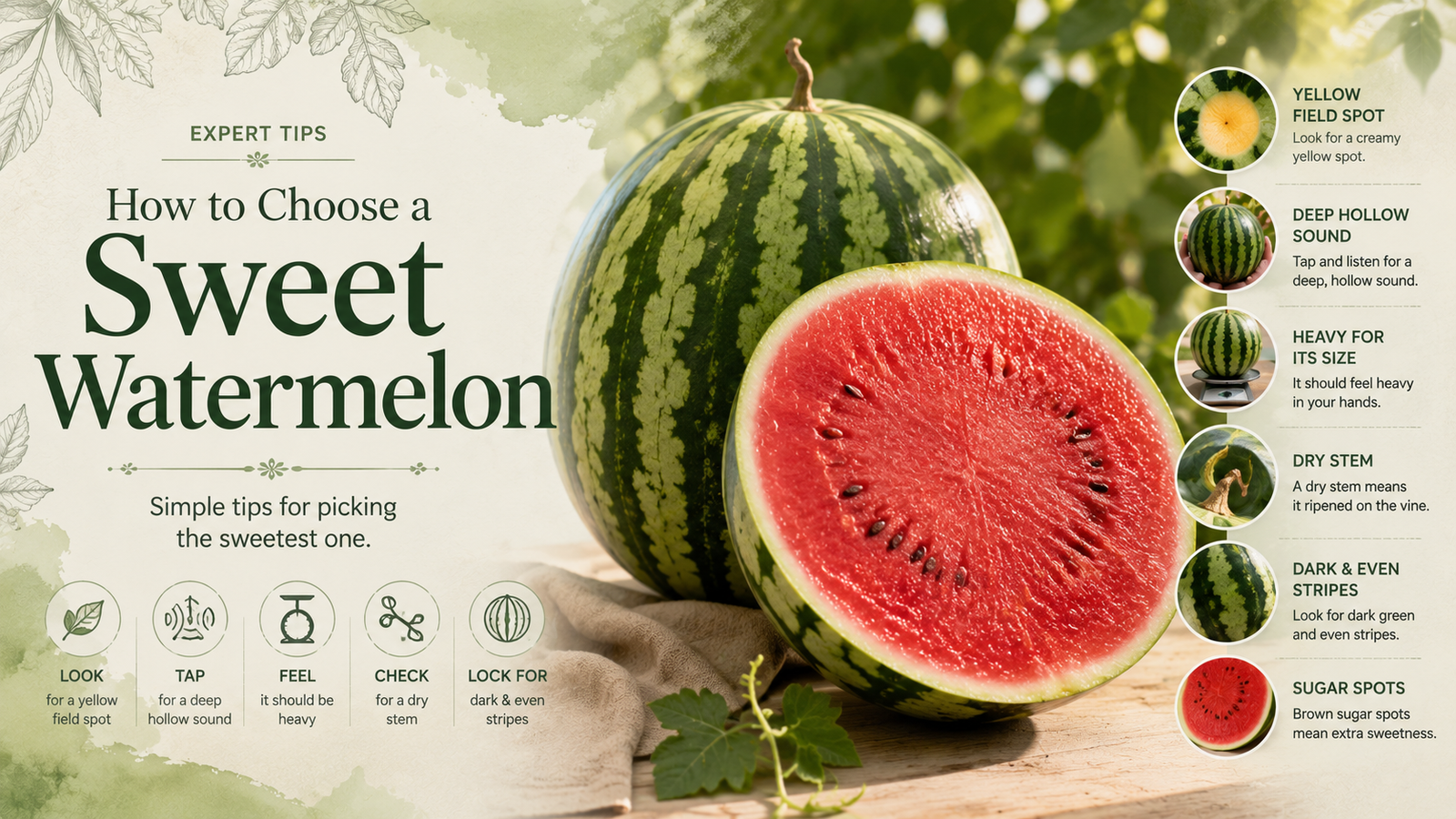
The science and the simple, reliable tests behind picking a perfectly ripe, sugary watermelon every time.
There are few summer disappointments quite as sharp as slicing open a watermelon you were looking forward to, only to find it pale, watery and bland. The frustrating part is that you can’t see inside before you buy — or so it seems. In fact, a ripe watermelon gives away a surprising number of clues before it’s ever cut, and once you learn to read them, you’ll pick a sweet one almost every time. This guide covers the reliable signs, explains why each one works, and clears up a few common myths.
First, How a Watermelon Ripens
Understanding one crucial fact makes everything else click into place: a watermelon does not continue to ripen after it’s picked. Unlike a mango or banana, which will happily sweeten on your kitchen counter, a watermelon is as sweet as it will ever be the moment it leaves the vine. This is why choosing well at the point of purchase matters so much — you can’t rescue an underripe melon at home. Every sign below is really a way of reading how long the melon stayed on the vine, soaking up sun and sugar, before it was cut.
The Reliable Signs of a Sweet Watermelon
- Look for the field spot. This is the single most reliable sign. The field spot is the pale patch on the underside where the melon rested on the ground as it grew. On a ripe melon this spot is a rich, creamy yellow or deep butter-gold. On an underripe one it’s white or greenish. A golden field spot means the melon sat on the vine long enough to ripen fully — exactly what you want.
- Pick it up — it should feel heavy. A ripe watermelon is around 92 percent water, so a properly ripe one is dense and feels surprisingly heavy for its size. Lift two melons of similar size and choose the heavier one; that extra weight is water and sugar packed into the flesh.
- Knock on it and listen. Give the melon a firm tap with your knuckles. A ripe one produces a deep, resonant, almost hollow thump — the sound of juicy flesh inside. An underripe or overripe melon sounds higher, flatter or duller. This takes a little practice, but once your ear is trained it’s a genuinely useful test.
- Check the shape and symmetry. Choose a melon that is evenly shaped and symmetrical, whether round or oval. Irregular lumps, flat sides or a lopsided form can indicate inconsistent water and sunlight during growth, which often means uneven sweetness inside.
- Find the webbing and sugar spots. Those rough, brown, web-like lines and dark sugary specks on the skin are a very good sign. They mark where bees pollinated the flower — and more pollination generally means a sweeter, better-developed fruit. Don’t be put off by these cosmetic marks; they’re a promise of sweetness.
- Look at the stem or tail. If the stem is still attached, a dried, curly, brown stem means the melon ripened naturally and detached on its own — ideal. A green, fresh-looking stem suggests it was cut from the vine too early, before it finished ripening.
- Prefer a dull rind over a shiny one. A ripe watermelon has a matte, slightly dull finish. A very shiny, glossy rind often indicates an underripe melon. Combined with the other signs, this small detail helps confirm your choice.
| Sign | Choose It | Leave It |
| Field spot | Creamy yellow or gold | White or pale green |
| Weight | Heavy and dense for its size | Light, feels hollow |
| Sound when tapped | Deep, hollow thump | Dull, flat or high-pitched |
| Shape | Even and symmetrical | Lumpy or lopsided |
| Stem / tail | Dry and brown | Green and fresh |
| Rind finish | Dull, matte | Very shiny, glossy |
Choosing a Pre-Cut Watermelon
If you’re buying watermelon already cut into halves or slices, the rules change slightly, because now you can see the most important thing of all — the flesh. Look for deep, uniform red colour, which signals full ripeness. The seeds should be dark brown or black and mature; lots of pale white seeds suggest the melon was picked young. Avoid pieces with white streaks running through the red, and steer clear of flesh that looks grainy, dry or is separating and pulling apart, which is a sign of an overripe or mishandled melon.
Common Myths, Cleared Up
- “Bigger is sweeter.” Not true. Size mostly reflects variety and growing conditions, not sweetness. Medium melons often have the best balance of sugar and water.
- “Brown web marks mean it’s damaged.” The opposite — webbing is a sign of heavy pollination and usually points to a sweeter fruit.
- “A green stem means it’s fresh.” A green stem actually suggests the melon was picked too early. A dry, brown stem is the better sign.
Storing and Serving
A whole watermelon keeps well at room temperature for about a week, or up to two weeks in the fridge. Once cut, always cover the exposed flesh, refrigerate it, and eat it within three to four days for the best taste and texture. Watermelon is at its most refreshing served chilled — a light sprinkle of black salt or a squeeze of lime lifts the flavour beautifully on a hot day.
| The Quickest Check If you only remember one thing: find a creamy-gold field spot and pick the heaviest melon of its size. Those two signs alone will land you a sweet watermelon the vast majority of the time. |